
There’s a version of The Mermaid exercise on almost every piece of Pilates equipment – the Mat, Reformer, Chair, Cadillac and the Barrels. In fact, there are often several variations, which says a lot about how valuable this movement is for the body.
The exercise gets its name from the traditional seated position, where the legs fold into a “Z” shape, similar to how a merperson might tuck their tail beneath them to sit. However, tight hips or knees can make this position uncomfortable for some people, so there are plenty of alternative set-ups that allow everyone to enjoy the benefits of The Mermaid without the classic leg position.
At its heart, The Mermaid is all about lateral flexion – otherwise known as side bending. Many versions also include rotation, making it a wonderfully three-dimensional movement for the spine. In this Blog we’re going to have a quick look at the side bending aspect included in all variations of The Mermaid.
Why Side Bending Matters
Our spine is designed to move in many different ways:
A balanced Pilates workout should include each of these spinal movements, so next time you’re in class, see if you can spot them all.
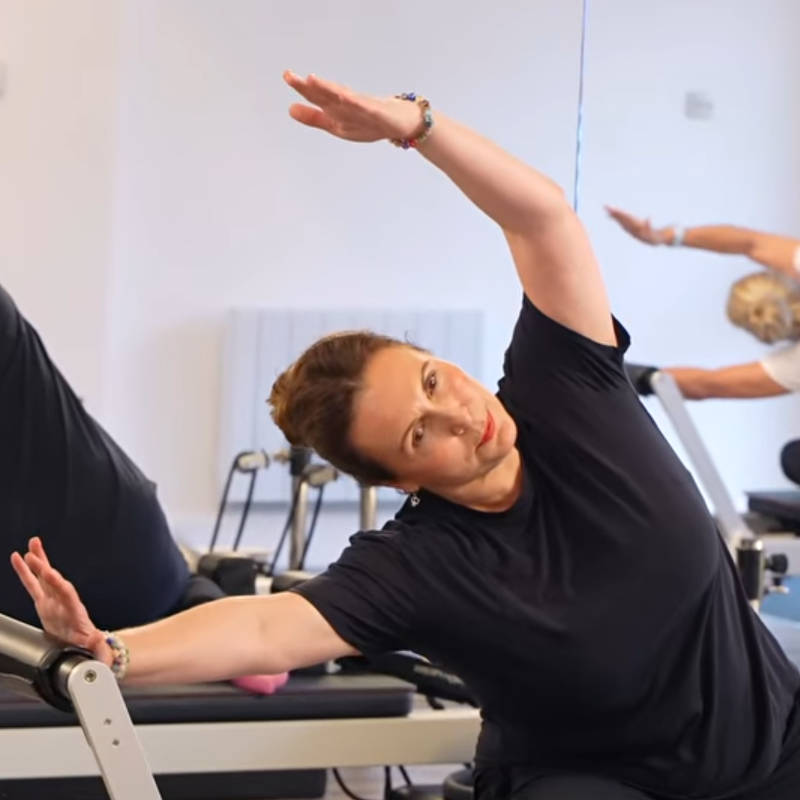
Side bending is particularly important because it’s a movement we don’t use very much in everyday life. As a result, it’s often one of the first movements we lose as we get older. Reduced spinal mobility is incredibly common with age – which is why the saying “use it or lose it” really does apply here. If you don’t include side bending in your routine regularly, that’s when you start to lose that movement.
If we don’t regularly move the spine in all directions, the body gradually becomes stiffer and less mobile.
The Muscles Behind the Movement
The Mermaid works a whole collection of important muscles, including:
These muscles don’t just create movement; they also stabilise and support the spine. When they aren’t working efficiently, other muscles often try to compensate, which can contribute to tension and back pain.
The body works best when all muscles are sharing the workload properly … regular movement is what keeps them healthy and functioning well.
The Mermaid also encourages movement through the intercostal muscles between the ribs, helping maintain easier, more efficient breathing.
Everyday Benefits
Interestingly, your lower back performs a small amount of side bending with each step as you walk. Keeping this movement available and comfortable helps support natural, fluid walking patterns and overall spinal health.
Tips for Class

When practising side bends, the goal is to create length rather than compression in the spine. That’s why you’ll often hear us asking you to “lengthen up” as you bend sideways.
A couple of common things to watch out for:
Come and Experience It
There’s so much more we could say about The Mermaid and side bending – but the best way to understand the movement is to experience it for yourself!
So next time you’re in class at The Pilates Boutique, keep an eye out for Mermaid variations – maybe using the platform extender or box on the Reformer, or perhaps even standing side bends.
Your spine will thank you for it.