Find Your Session
Find a session that fits your week and book your place online in just a few clicks. Explore the timetable, choose your level, and enjoy clear coaching in a boutique studio setting.
So, what is it about a Pilates session that leaves us feeling calmer, lighter and more positive?
Of course, moving your body feels good. Pilates is a low-impact, full-body workout that mobilises the spine through all of its natural movements – flexion, extension, rotation and side bending. It strengthens the deep stabilising muscles that support ease of movement, while also challenging the larger muscle groups through controlled, weight-bearing exercises. The result is a body that feels stronger, more mobile and more balanced.
But the benefits of Pilates extend beyond the physical.
One of Pilates’ strengths is its focus on posture. Poor posture is often both a symptom and a cause of stress. Rounded shoulders and a hunched back place extra strain on the body, while standing tall with good alignment can instantly make you feel lighter, more confident and more relaxed. When the body is working in the way it was designed to, everything simply feels better.
Pilates also helps release muscular tension. As physical tension melts away, particularly in the neck, shoulders and upper back – areas where many of us unconsciously store stress, mental tension often seems to disappear with it. After all, when your body feels good, your mind usually follows. Living with pain or discomfort can be mentally draining, so reducing those aches can have a positive effect on your mood.
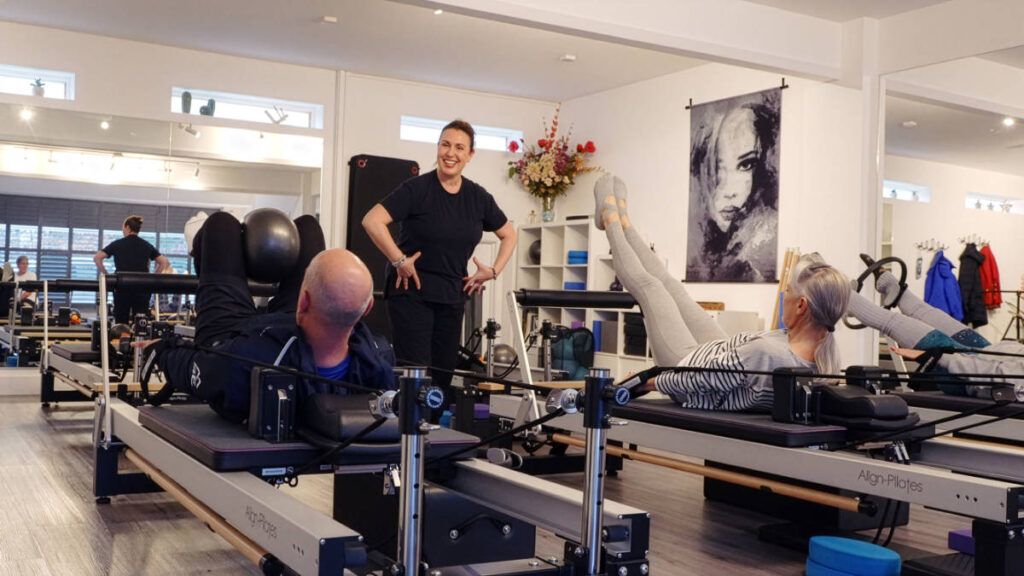
Another reason Pilates is so beneficial for mental wellbeing is the level of concentration it requires. Every movement is performed with control and precision, demanding your full attention. Rather than letting your mind drift, you’re encouraged to focus on your breathing, your posture, which muscles are working and how each movement feels.
This mindful approach creates a rare opportunity to be completely present. In our busy lives, how often do we spend an entire hour simply paying attention to our bodies? Unlike some forms of exercise where your mind can easily wander, Pilates continually brings your focus back to the present moment.
Throughout a class, your teacher’s cues guide you to notice your movement, coordinate your breath and engage the correct muscles. This inward focus helps create a sense of calm, balance and connection between mind and body. Many people find that regular Pilates helps reduce stress and anxiety, quietens an overactive mind, improves concentration and even leads to better sleep.
Breathing also plays a powerful role. Conscious, controlled breathing stimulates the parasympathetic nervous system – our body’s natural rest and restore state. This helps slow the heart rate, lower blood pressure and reduce cortisol, the body’s stress hormone. When cortisol remains high for long periods, it can contribute to fatigue, brain fog, weight gain, poor sleep and mood changes.
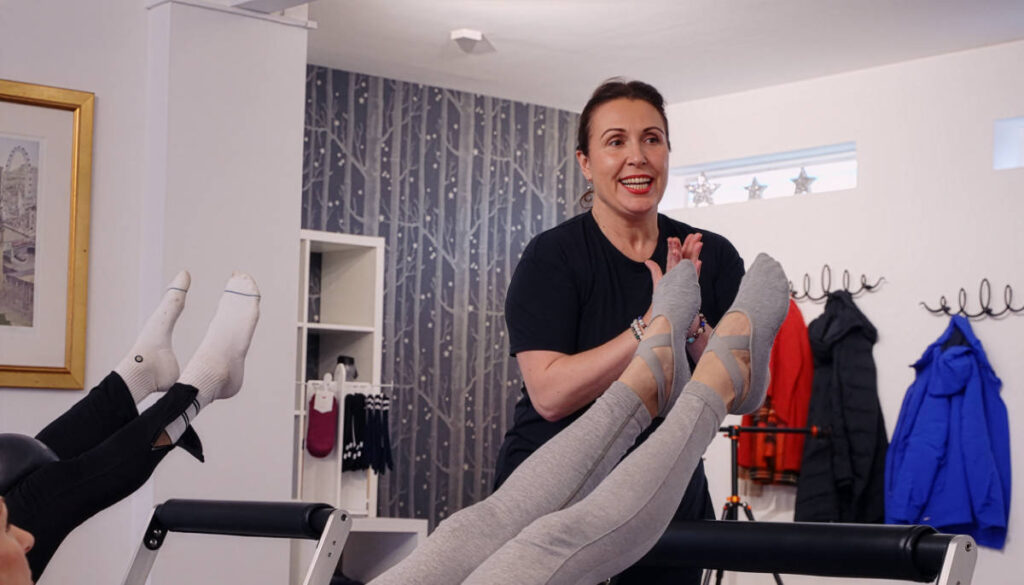
So Pilates isn’t simply about building a stronger core, sculpting muscles or improving flexibility – it’s about creating a stronger connection between your body and your mind. It leaves you feeling energised rather than exhausted, relaxed rather than depleted.
Whether you first came to Pilates with a stiff back, tight shoulders or simply wanting to move more, you may discover that the greatest transformation isn’t just physical. It’s the feeling of leaving class calmer, clearer and better equipped to handle whatever the day brings.
Perhaps that’s why so many people resonate with our quote of the month “I came to Pilates for my stiff back; I stayed for my mental health.” After experiencing the benefits of Pilates for yourself, you’ll understand why.
Written by Kate Wilson
I have been attending Lisa’s Pilates classes for almost a year now. Lisa choreographs the classes conscientiously, making sure there is a balance between challenge and relaxation. I have definitely felt a positive change in my posture and core strength, as well as my motivation to look after myself. I would highly recommend it to anyone and everyone.
Find a session that fits your week and book your place online in just a few clicks. Explore the timetable, choose your level, and enjoy clear coaching in a boutique studio setting.